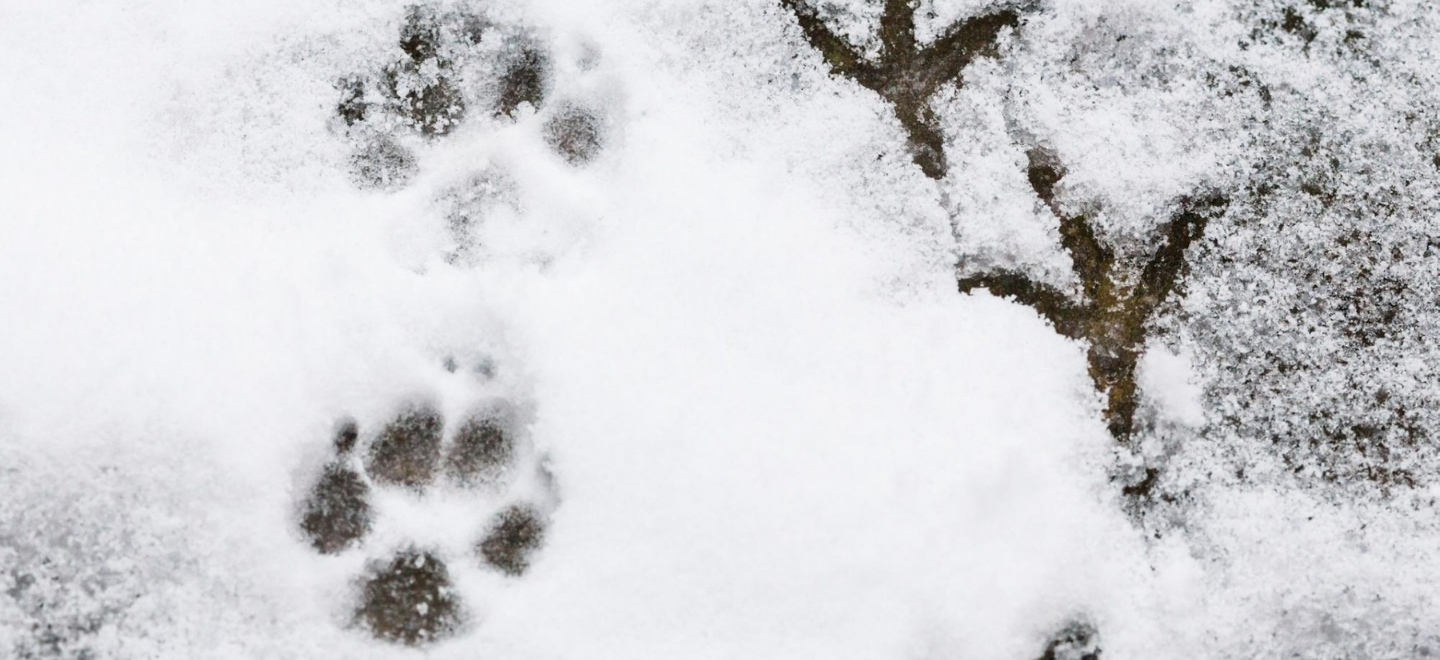
Even if you don’t see an animal, you can often find clear signs of wildlife through animal tracks left behind in snow, moist soil, or sand. Learning how to spot and identify wildlife tracks is a fun way to discover the animals living in your neighborhood.
Let’s Get Started
Head outside to look for animal tracks in the snow or after it rains. Lots of animals are active at night or early in the morning and leave clues behind if you know how to find them. You can learn to identify the animals living in your neighborhood even if you don’t see them out in the open, by the footprints they leave behind.
- Track early in the morning or late in the day when shadows make prints easier to see.
- Note the size of the track and whether it shows claw marks.
- Learn how animals travel and the patterns they make. If they hop, like a rabbit or squirrel, the larger hind feet land before the smaller front feet. Do they walk in a straight line like a fox or cat? Do they waddle like a raccoon?
- How many toes do they have? Hooved animals like deer and elk have two toes. Most perching birds have 4 toes, three in the front and one in the back.
- Use this wildlife tracks guide to help you identify the tracks you find.
Document Your Discoveries
- Take a photo of the tracks you find or draw them in our Nature Notebook.
- Learn more about backyard wildlife tracks.
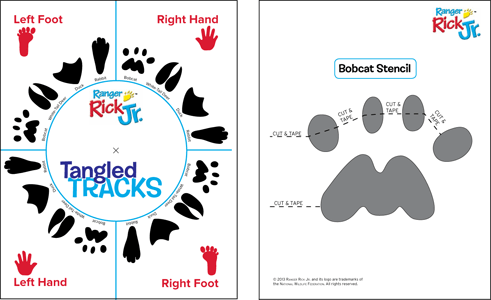
- Bonus: Use the patterns provided or make your own to make an Animal Tracks Twister mat and play a fun game from Ranger Rick’s ® “Tangled Tracks Twister”